
The Shauli Einav Quartet in Aachen
How a saxophonist's international quartet opened a new chapter for chamber jazz at Theater Aachen
On a rainy night in November 2024, the Kammer, a compact 149-seat performance space tucked on the third floor of Theater Aachen, hosted a concert that carried more weight than a typical Friday-night jazz gig. It marked the launch of a new concert series, KammerJazz im Theater, conceived during the theatre’s anniversary season as a way of turning one of its smaller stages into a dedicated home for jazz. The musicians chosen to inaugurate that series were the Shauli Einav Quartet, presenting their newly released album “Living Organs” to an Aachen audience for the first time.
The choice was a deliberate statement of ambition. Rather than opening quietly with a local act, the organisers brought in an internationally touring band led by an Israeli-born saxophonist with more than two decades of experience on stages in New York, Paris and beyond. It signalled that the Kammer intended to place itself alongside Aachen’s other established jazz venues, such as the Jazzkneipe Dumont and the Büchel-Museum, as a serious address for the genre.
A Series Born from Collaboration
KammerJazz im Theater did not emerge from a single institution acting alone. It grew out of a partnership between figures who already knew the Aachen jazz scene intimately: Armin Burke, associated with the Jazzkneipe Dumont; Klaus Zebner of the Büchel-Museum; and Werner Hüsgen of the Gesellschaft für zeitgenössische Musik. Working alongside Theater Aachen and its artistic operations director, René Dase, the trio pooled their contacts and programming experience to build a season capable of drawing both dedicated jazz listeners and newcomers curious about the intimate format the Kammer offers.
Tickets for the opening concert were priced at 26 euros, with a reduced rate of 17 euros, a pricing structure intended to keep the series accessible while reflecting the calibre of the touring artists involved. The season that followed the Einav concert continued with other international names, underlining that the Shauli Einav Quartet’s appearance was not a one-off booking but the first entry in a sustained programme.
The small scale of the room itself became part of the appeal: with just under 150 seats, the Kammer offers a level of proximity between performers and audience that larger concert halls cannot replicate, well suited to a genre built on nuance, interaction and improvisation.
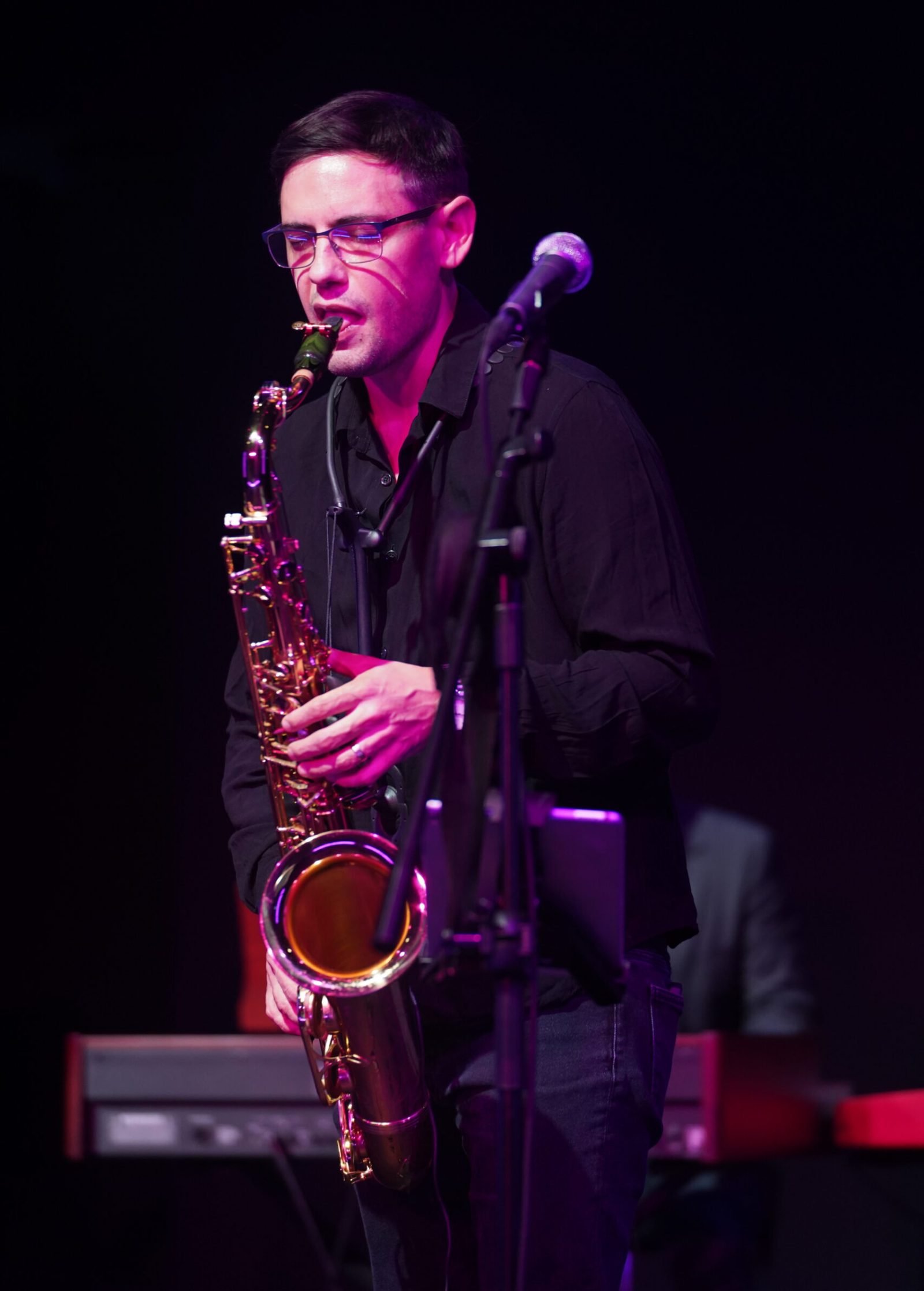
Shauli Einav: A Musician Shaped by Three Cities
Shauli Einav’s biography reads like a map of the jazz world’s shifting centres of gravity over the past twenty years. Born in the Israeli countryside, he left home to study in New York, immersing himself in the city’s demanding jazz education and performance circuit before relocating to Paris, where he spent several formative years building a reputation on the city’s club and festival scene.
More recently he has settled in Luxembourg, a move that has placed him at the heart of the European touring circuit while keeping him closely tied to the French and Benelux jazz communities.
Over the course of his career, Einav has built a substantial list of collaborators drawn from across the contemporary jazz landscape, including pianists Aaron Goldberg, Shai Maestro and Tigran Hamasyan, saxophonist David Liebman, guitarist Gilad Hekselman, bassist Avishai Cohen and drummer Jonathan Blake.
Such a roster reflects both the range of Einav’s musical interests and the esteem in which he is held by peers spanning straight-ahead post-bop, more exploratory contemporary jazz, and music informed by Middle Eastern and Mediterranean influences.
His playing has also drawn consistent praise from the specialist press. Down Beat magazine has highlighted his skill in smartly arranged group interplay, while JazzTimes has singled out his agility and the bright, powerful clarity of his tone on both tenor and soprano saxophone.
All About Jazz has described him as a remarkably accomplished musician, a virtuoso soloist with a lush sound on both horns, whose compositions are described as bold and probing. Running through this critical reception is a recurring theme: Einav is regarded less as a stylistic imitator than as a searching composer using the saxophone to work out a personal and continually evolving musical language.
“Living Organs” and the New Quartet
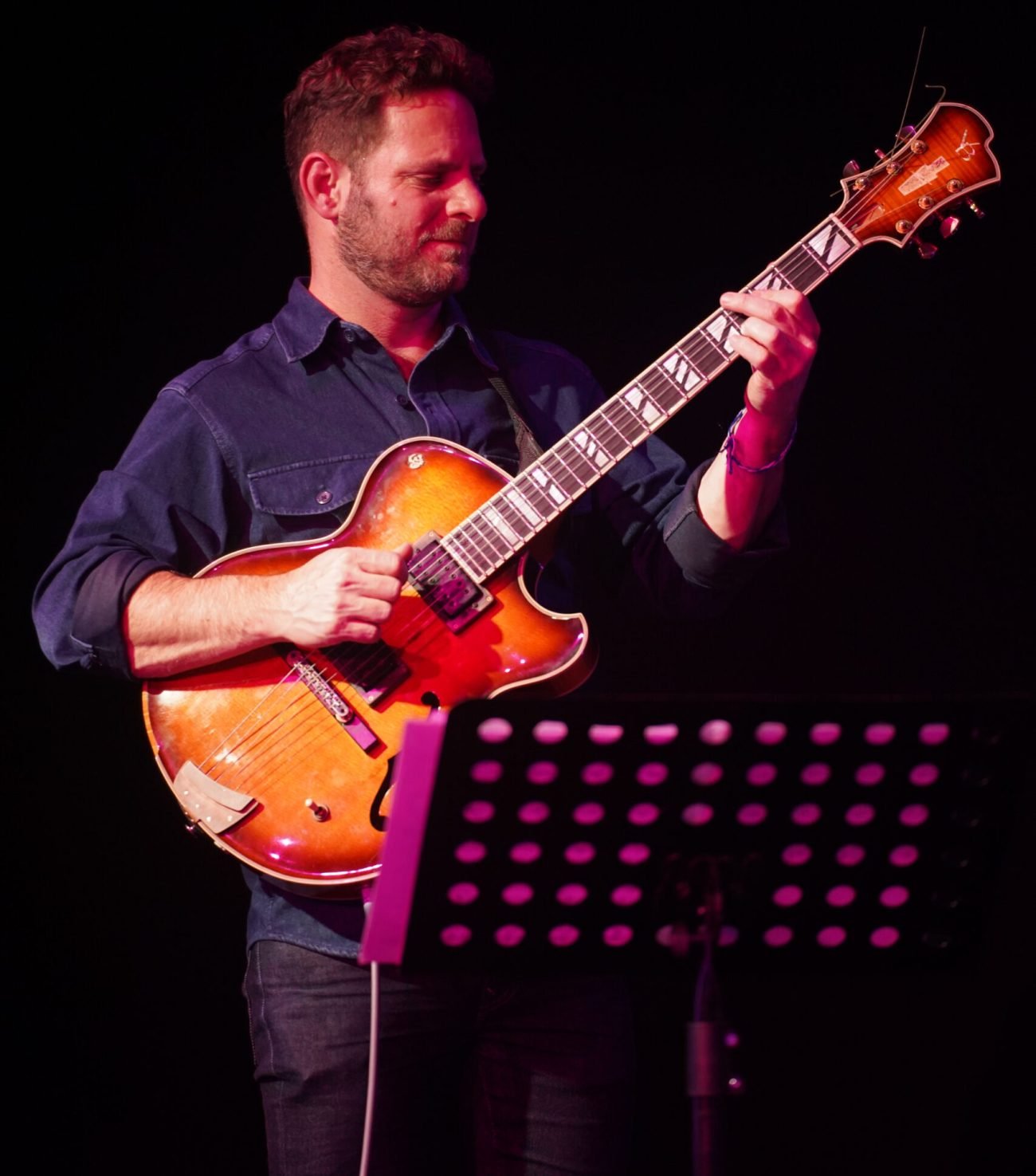
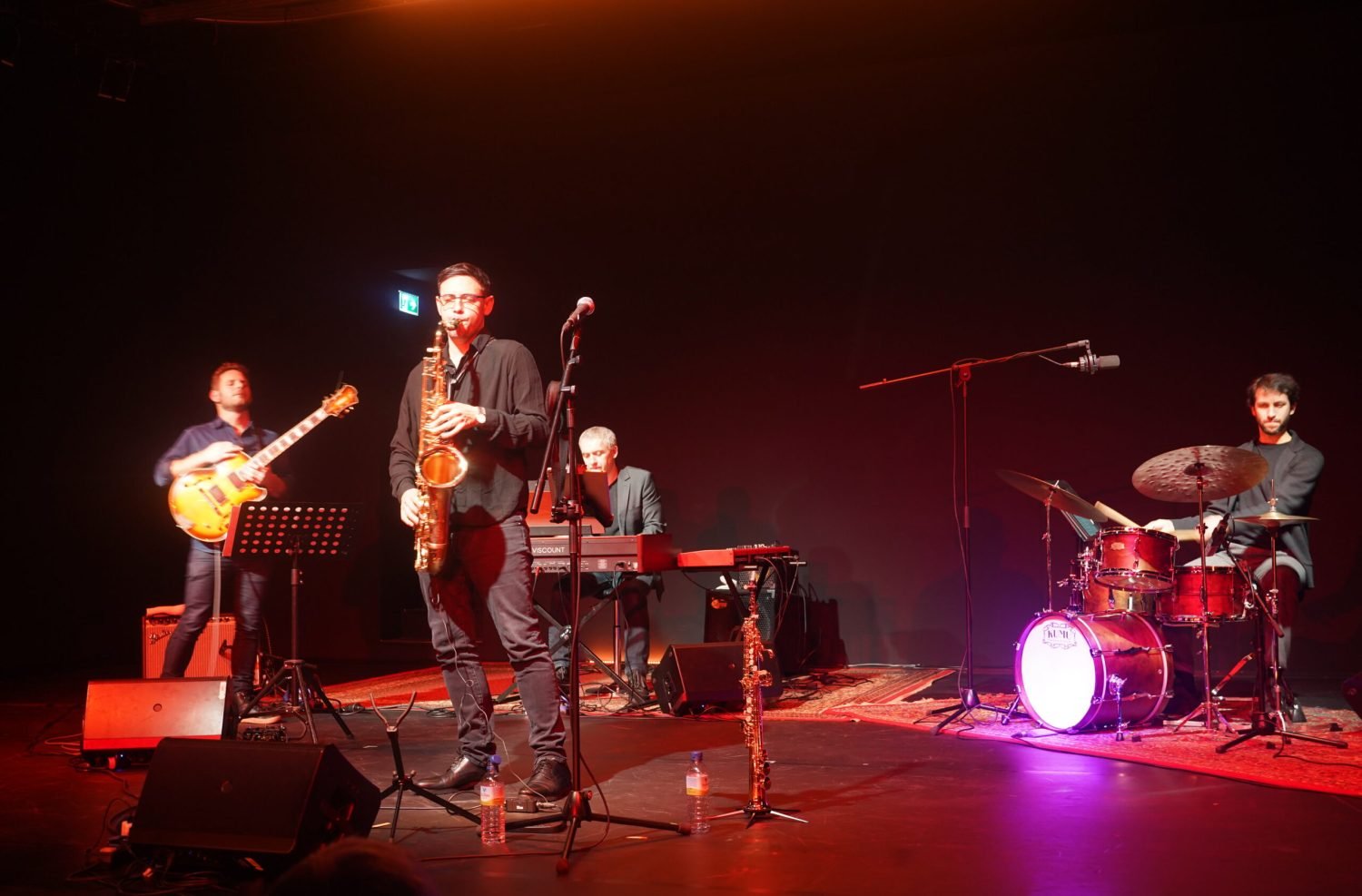
The album at the centre of the Aachen concert, “Living Organs,” marked the debut of a newly assembled group built around the classic jazz organ combo format, but reimagined for a contemporary context. Alongside Einav on tenor and soprano saxophones, the quartet features Laurent Coulondre on organ and keyboards, Eran Har Even on guitar, and Paul Wiltgen on drums.
The absence of a conventional double bass, with the organ’s pedals and left hand instead anchoring the low end, is one of the format’s defining features and a large part of what gives the group its distinctive, blended texture.
The organ-guitar-drums-saxophone lineup has deep roots in jazz history, associated with soul-jazz and hard-bop groups of the 1950s and 1960s. Einav’s quartet uses that lineage as a starting point rather than a destination, folding in elements of rock and pop phrasing alongside more traditional jazz vocabulary.
The result, as the album’s own framing puts it, treats the human body’s living organs as a metaphor: each instrument functions like an organ with its own distinct role, but the music only becomes fully alive when all four parts operate together as a single interdependent system.
Reviewers have picked up on this sense of vitality, with one description calling the record a stylish collection full of surprising twists, and another praising it as a strikingly modern session that treats jazz tradition as something built from diverse and wandering paths rather than a fixed inheritance.
An Evening in the Kammer
For the Aachen performance, the quartet brought that studio concept into a live setting defined by close quarters and attentive listening. In a room the size of the Kammer, the interplay between Coulondre’s organ textures and Har Even’s guitar lines, underpinned by Wiltgen’s drumming and topped by Einav’s saxophone, would have been audible in a way that larger, more diffuse rooms cannot offer.
Local concert listings placed the Shauli Einav Quartet’s Aachen date squarely within the city’s broader November music calendar that week, appearing alongside punk, blues and other jazz bookings across venues such as the Musikbunker, the Domkeller and the Wild Rover, a reminder of just how active Aachen’s live music scene is on any given weekend, and of the specific niche the new KammerJazz series was designed to fill within it.
Part of a Larger Story
Subsequent concerts in the KammerJazz series, including appearances by other touring ensembles in the months that followed, suggest that the opening night achieved what its organisers intended. By choosing a quartet with Einav’s international profile and critical pedigree to inaugurate the series, the programmers signalled an ambition to make the Kammer a fixture on the European jazz touring circuit rather than an occasional novelty booking. For Einav himself, the Aachen date formed part of a wider European tour supporting “Living Organs,” one stop among many as the saxophonist and his quartet carried the album’s blend of organ-driven groove and searching improvisation from city to city.
Taken together, the Shauli Einav Quartet’s appearance in Aachen offers a small but telling case study in how a mid-sized German city sustains its cultural life: through partnerships between independent promoters and established institutions, through venues willing to repurpose intimate spaces for a specific artistic community, and through musicians whose restless movement between New York, Paris and Luxembourg embodies the increasingly international character of the jazz world they help sustain.